Cowichan River

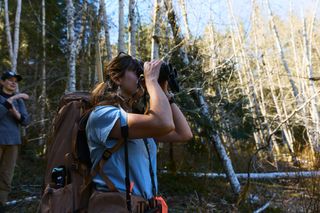
Coni from BC Parks Foundation uses binoculars at Cowichan River

About this conservation project

In 2023, BC Parks Foundation purchased 562 acres (225 hectares) of forest and wetland habitat in the Cowichan River watershed for permanent protection. The property safeguards one of the province’s most underrepresented ecosystems—the Very Dry Maritime subzone of the Coastal Western Hemlock biogeoclimatic region. Only two per cent of this ecosystem is currently protected in British Columbia.

The land holds a rich mosaic of habitats: wetlands shaped by beavers, forests with cedar, maple, and alder trees, and stream corridors flowing into the Cowichan River. It provides refuge for wildlife, from western toads to songbirds to elk.

Now, through a partnership with the Quw’utsun Cultural Connections Society, it has become a living classroom where youth learn about biodiversity and restoration while building relationships with the land.

A partnership rooted in stewardship

Following our successful protection of the area, BC Parks Foundation entered into an agreement with the Quw’utsun Cultural Connections Society so that they can use the property (on a non-exclusive basis) for restoration and stewardship of xpey’ (western redcedar) ecosystems, along with land-based education, cultural learning, and on-the-land programs.

This partnership shows how conservation happens—through care, reciprocity, and relationships that last over time.

“It’s not easy to find spaces like this,” said Cheyenne Williams, a young Cowichan Tribes member and leader, working with Quw’utsun Cultural Connections Society. “So much of the land in this region is privatized and is managed for other uses like industrial forestry practices. This place is special. It’s a space where our people, especially youth, can connect with the land, learn, and build community.”

Culture camp: learning from the land

This past June, that opportunity came to life when the Society hosted its first culture camp on the property—a gathering that was years in the making.

Together with the Environmental Stewardship Program at Quw’utsun Secondary School, more than 30 students spent two days immersed in the forest, guided by Indigenous elders and young leaders. For many of the students, it was their first time camping.

When they arrived, the group began by clearing invasive Scotch broom to make space for their tents. Cheyenne gathered everyone in a circle to share principles of Indigenous land stewardship: “The broom is an introduced species, but it still has a story. When we remove it, we’re creating space for native plants to return. The land holds memory, and it remembers the care we give it. That’s what this work is about: building reciprocal relationships with the land.”

“We talked a lot about nuts’a’maatshqwaluwun—one heart, one mind,” said Qwiyahwultu-hw, who has worked with youth in Cowichan for over 35 years. “It means being together as one family and looking out for each other. The youth really embraced that.”

Restoring xpey’—western redcedar

On the Cowichan River, a place you helped protect is being restored. More than 1,000 cedar trees have been planted, with Guardians on the land supporting their growth and monitoring the ecosystem over time.

The partnership is now entering its next phase: a cedar restoration project that blends traditional knowledge and land stewardship practices with mapping technology. Two newly hired Cultural Restoration Guardians are working with GIS and LiDAR data to map historic cedar ecosystems and predict the ideal conditions for xpey’ to thrive in the face of a changing climate.

They’ll soon begin ground-truthing these maps—walking the land to identify cultural features like culturally modified trees and ancient stumps, some still marked with springboard notches from logging decades ago.

The work will help inform family planting days planned for November, continuing an intergenerational story of renewal that connects past, present, and future.

Your support helps restore and protect places like the Cowichan River for generations to come.

Moving forward together

This collaboration between BC Parks Foundation and the Quw’utsun Cultural Connections Society demonstrates an approach to conservation that cares for both the land and the relationships that sustain it. It’s community-guided conservation, memory, and the shared responsibility to care for the land in a good way.

As Qwiyahwultu-hw reflected, “When we teach youth to care for the land, the land cares for them in return. That’s how we move forward—one heart, one mind.”

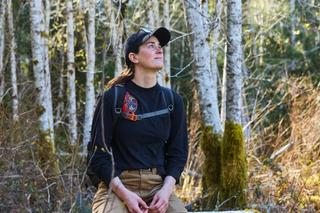
A biologist stands on Cowichan River property