At Florence Nightingale Elementary in Vancouver, that transformation is unfolding in one Grade 5/6 classroom led by teacher Cara Laudon.
This year, Cara’s students—along with their Grade 1/2 buddy class and the school’s Green Team—have turned their school grounds into something of a living laboratory.
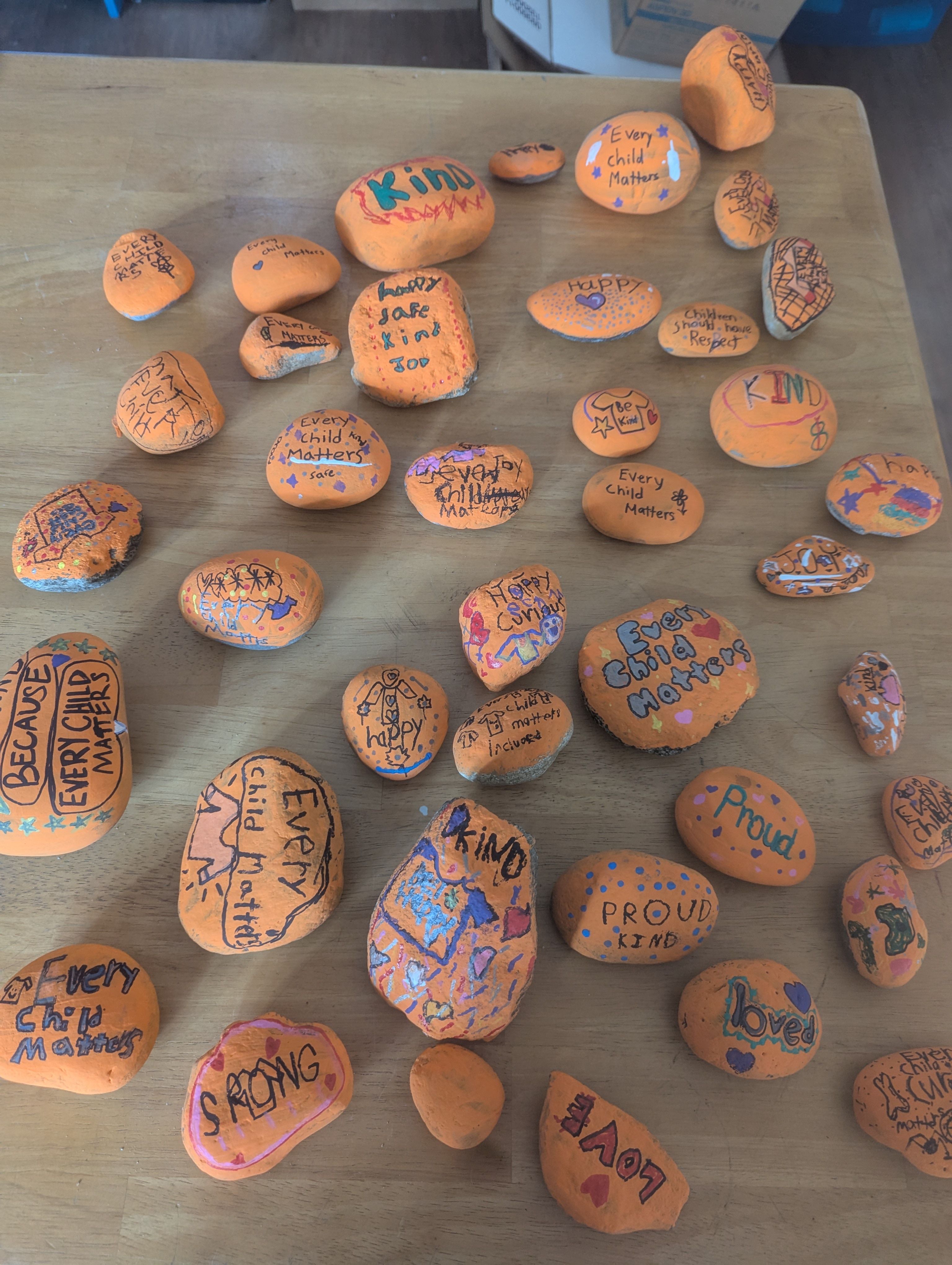
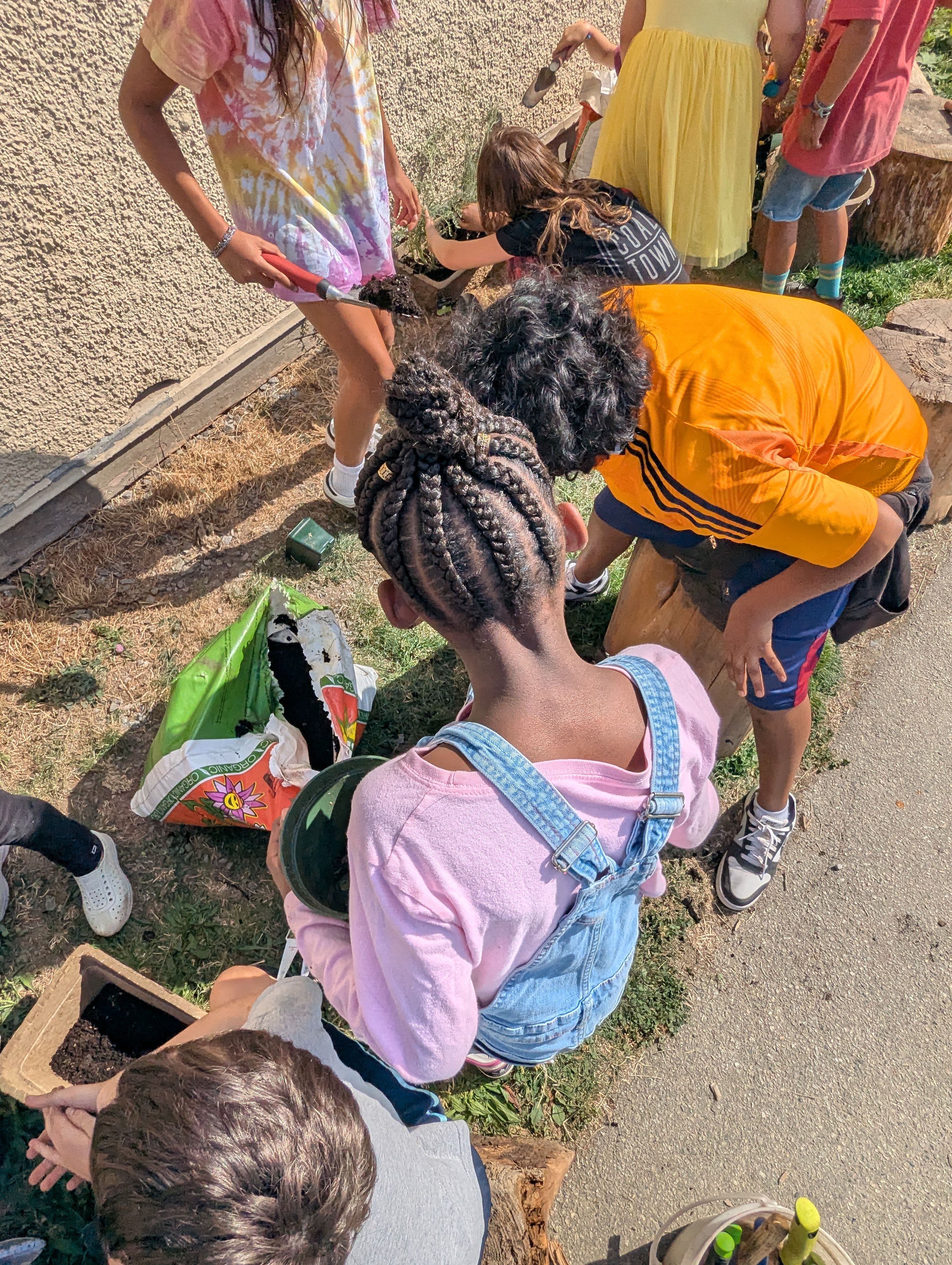
It started last fall with an Every Child Matters garden display. Using their Learning by Nature funding, students painted rocks, planted orange flowers for Truth and Reconciliation, and created a welcoming space beside the school garden where the whole community could pause and reflect.
Guided by an Indigenous knowledge holder working as a student teacher, the class began starting their time outside in a circle, sharing gratitude and learning from Indigenous ways of understanding the natural world.
“As we spent more and more time outside,” Cara says, “we started imagining what the space could become. We began thinking about what the area already has, what it needs, and how we could care for it over the long term.”
The students began paying closer attention. Over several weeks, they conducted a bio-inventory across their schoolyard, the garden, and the nearby St. George Rainway.
Equipped with field guides and notebooks purchased with their Learning by Nature funding, they set out to identify the mammals, birds, and plants they share their neighbourhood with, and the species they hoped might one day return.
The investigation unfolded slowly. Cara’s class repeated the surveys multiple times with different groups of students, including the younger buddy class and the Green Team.
Even the youngest learners became researchers.
“Kids will take more risks outside,” Cara says. “There’s less of a sense that there’s a right answer. When they can see something, touch it, smell it. They’re much more willing to take a guess.”
Sometimes those risks lead to powerful insights.
One student summed up the experience after a day outside. Being outdoors, he said, was his favourite “field trip” because “we get to see the people who live around us, and we also get to see the plants and animals living around us.”
For a child, that realization can be enormous. It means recognizing that the schoolyard and surrounding neighbourhood are a shared home for birds, insects, plants, and people.
And once the students started noticing, they also began asking questions. Their surveys revealed something interesting: there were plenty of birds around the school, but not many places for them to nest.
“So,” says Cara, “the students decided to change that.”
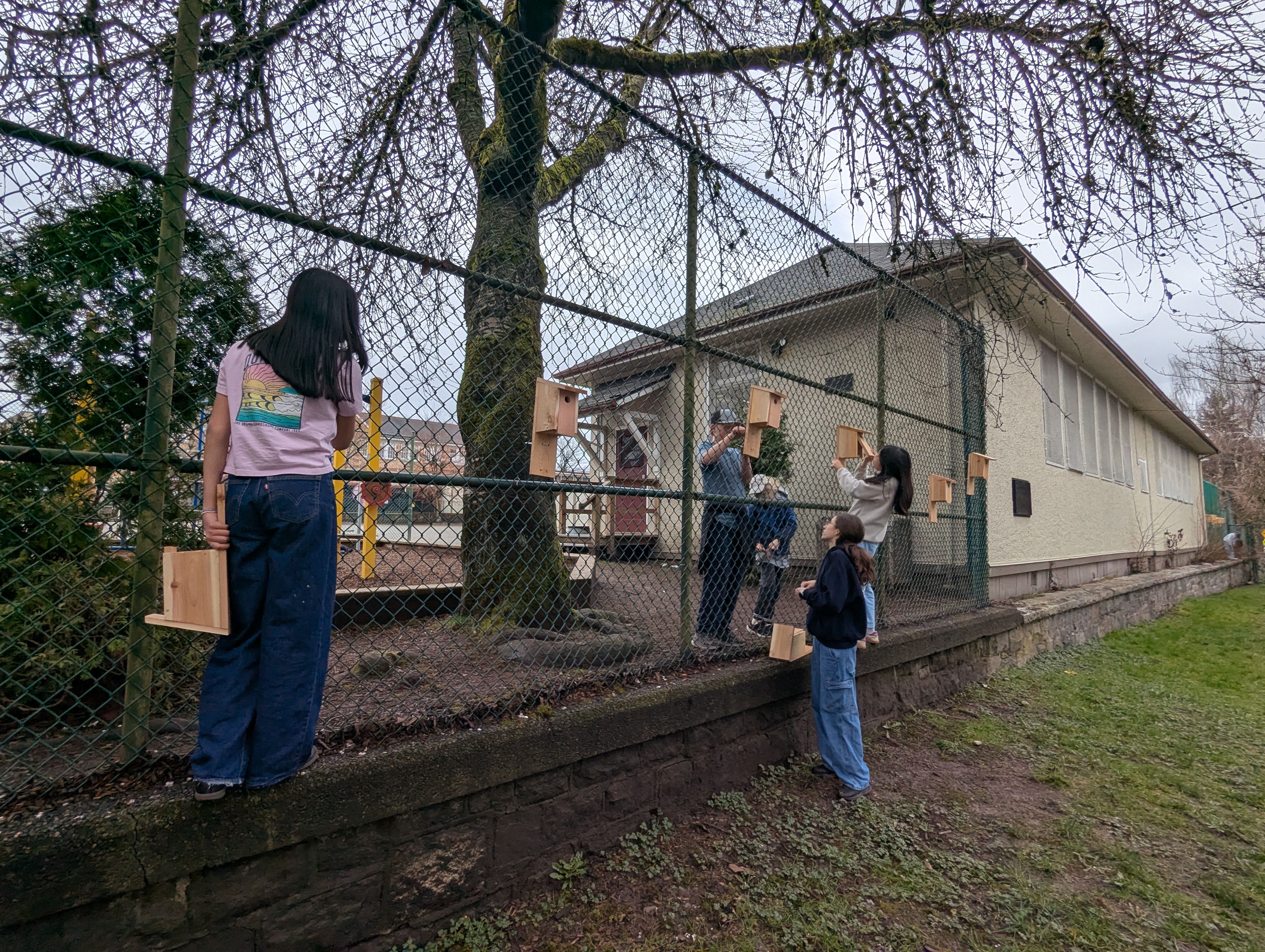
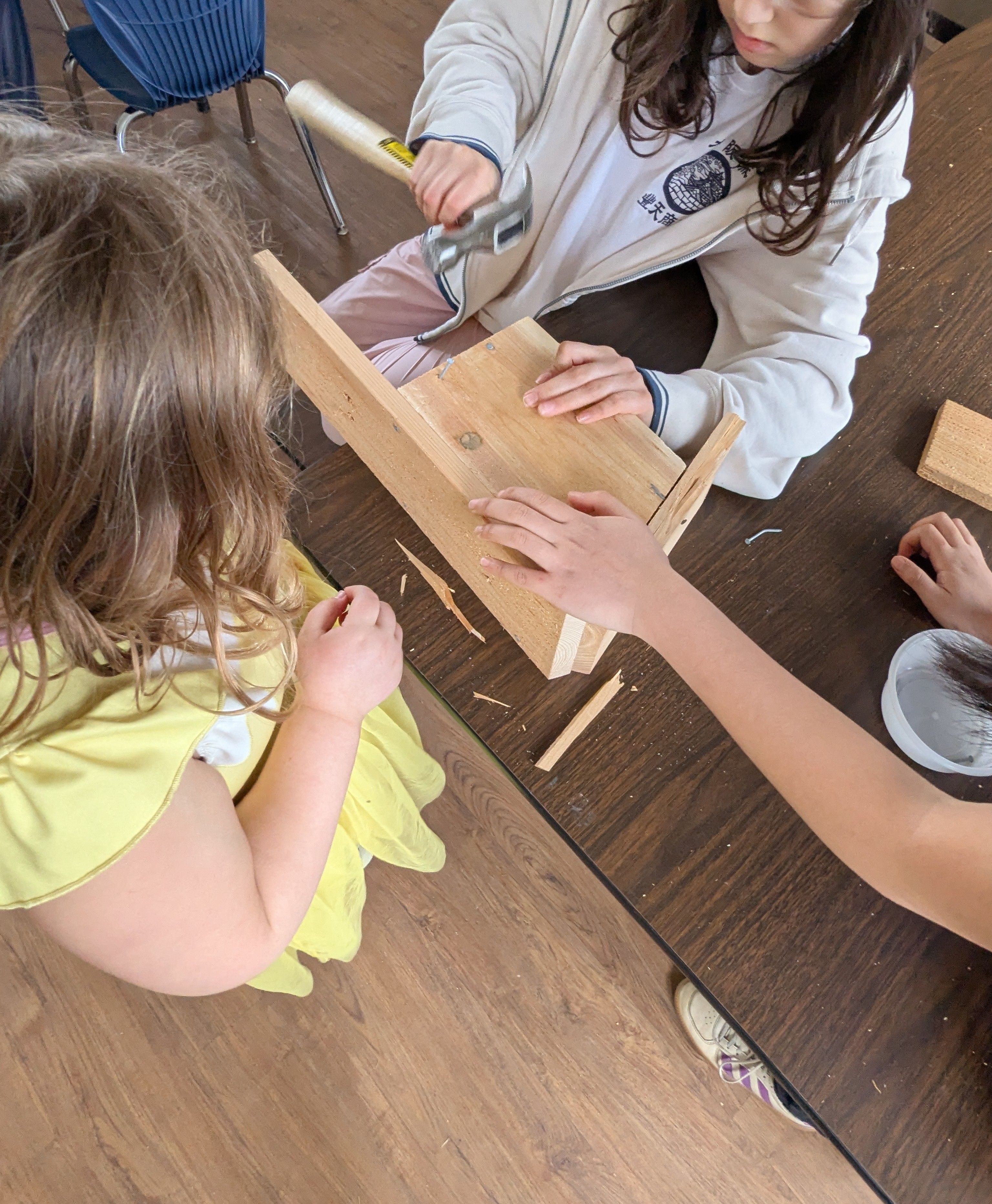
With their Learning by Nature funding, and together with their younger buddy class, they designed and built Black-capped Chickadee nesting boxes. The students researched how high the boxes needed to be, what materials chickadees prefer, and even what nesting materials might help them settle in.
“The little buddies actually did most of the hammering,” Cara says with a laugh. “For many of these Grade 1 students, it was the first time they’d ever held a hammer.”
Now the nesting boxes hang in the garden, waiting. Students monitor them carefully, recording observations and planning how they’ll clean and reinstall the boxes next year.
After noticing pollinators in the garden, students are now planning a mason bee “hotel strip” beside the school’s apple and fig trees. Future plans include pollinator seed-saving beds that will help neighbouring schools grow native plants of their own.
“The kids are now thinking of the schoolyard as more than a place for recess,” says Cara. “It’s a place where they observe, experiment, build, and care for the living world around them.”