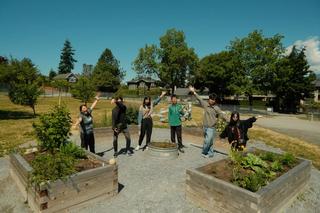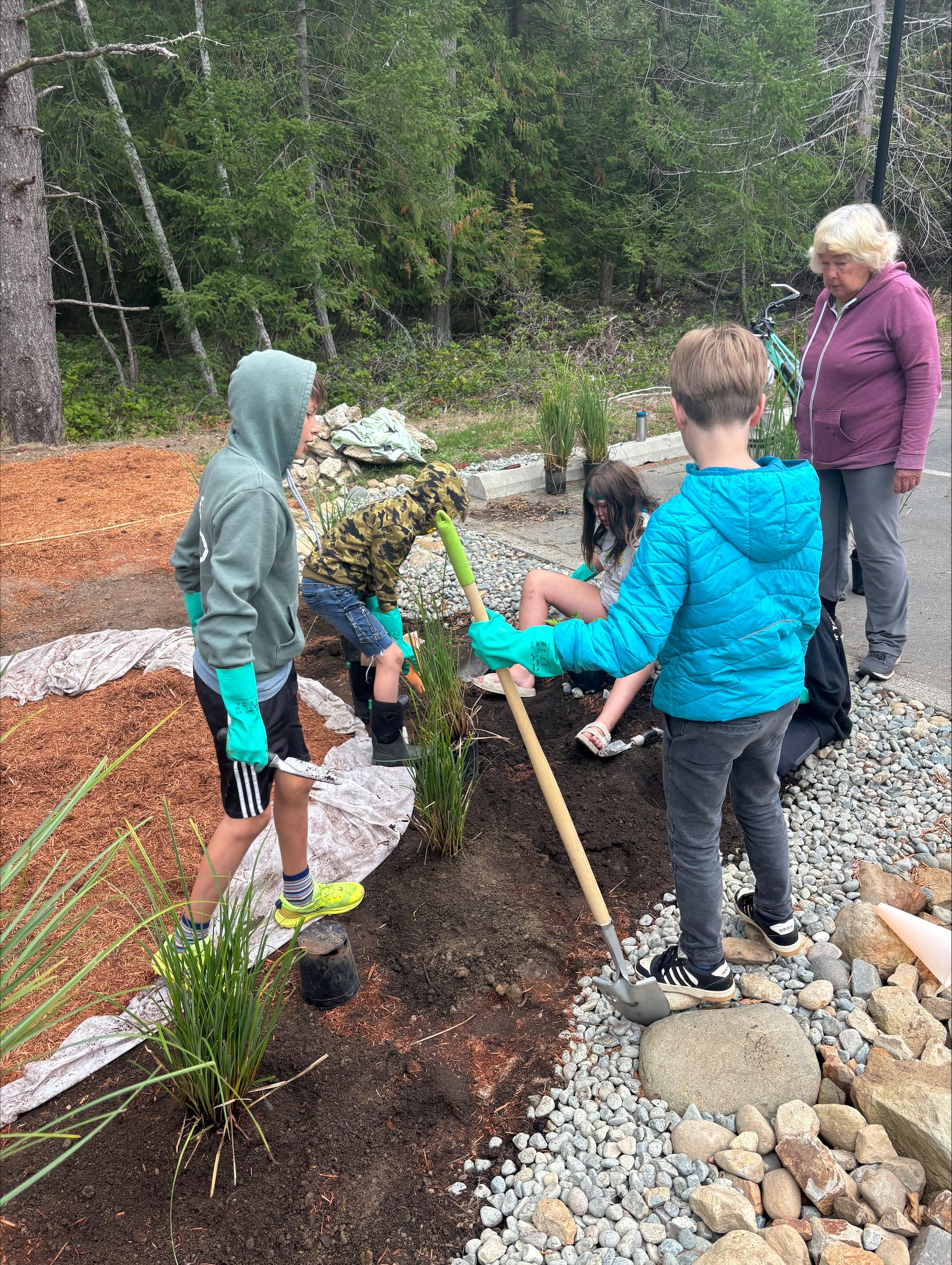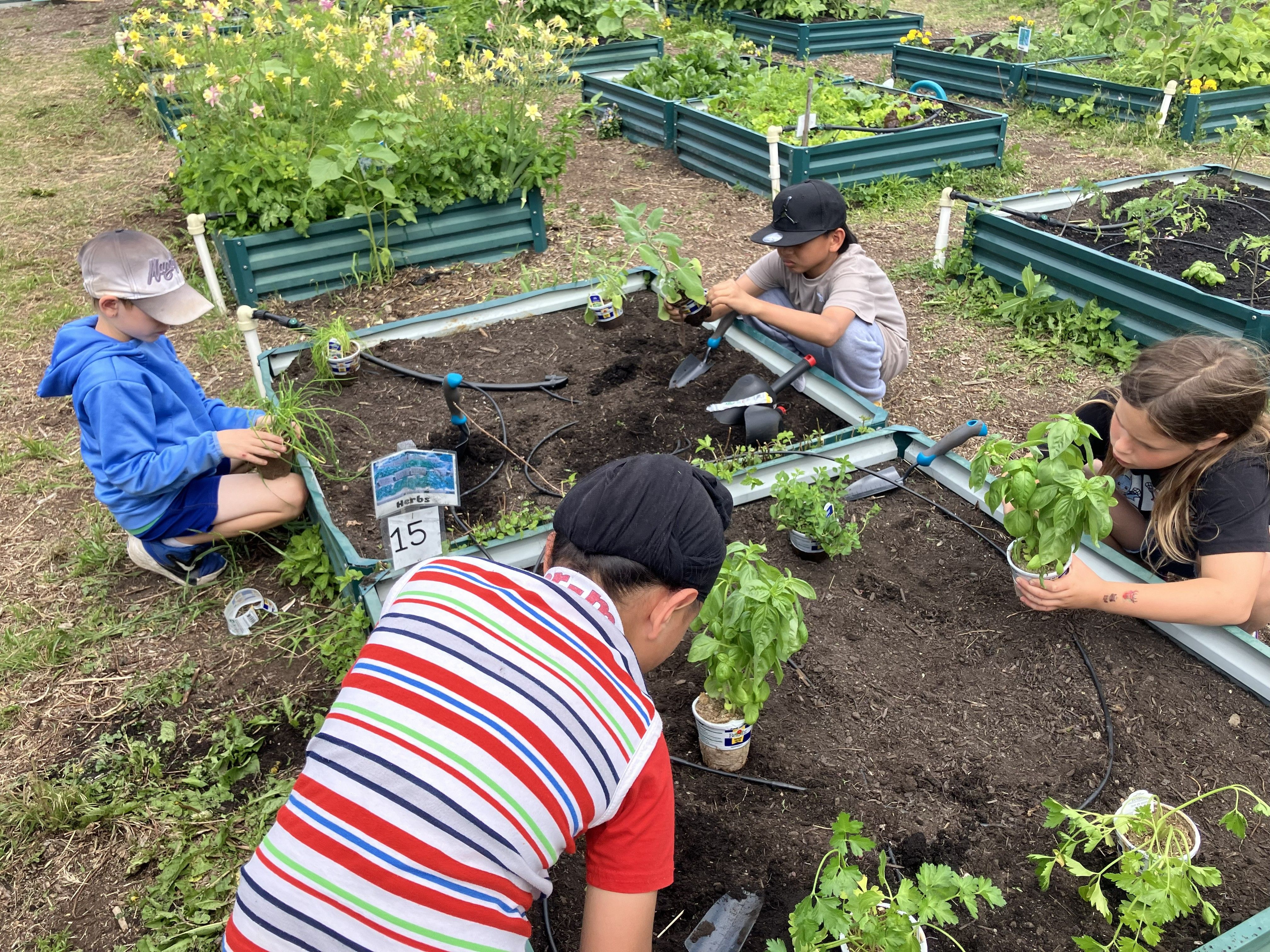
From restoring habitat and monitoring biodiversity to growing food and learning about native plants, students across BC are turning their school grounds into places for hands-on learning and conservation.
In the first year of Learning by Nature Student Climate and Biodiversity Leadership Grants in BC, approximately 9,000 students took part in projects that connect learning with action for nature. The grants are made possible by Environment and Climate Change Canada, the Province of British Columbia through the BC Parks Licence Plate Program, and private funders, including QuadReal Property Group and Teck.
Schools used the grants to create and restore habitat, grow food, plant native species, monitor biodiversity, and create new opportunities for outdoor learning. BC Parks Foundation funded almost 100 projects across the province, and their final reports documented how students, teachers, and school communities are learning about, enhancing, and caring for nature on their school grounds.
Increasing biodiversity on school grounds
Students created and improved habitat for plants, pollinators, birds, and other wildlife, while monitoring how biodiversity changed.
At Latimer Road Elementary in Surrey, students collected native seeds, propagated Indigenous and pollinator-friendly plants, and tracked their impact through species counts, journals, photos, and regular observations. By the end of the project, they recorded greater variety and abundance of pollinators, birds, and beneficial insects, including native bees, butterflies, and ladybugs.
At Alternate Community Programs in Prince George, students began restoring a degraded section of schoolyard by planting 77 trees and seedlings and creating a no-mow area where natural vegetation could return. For some, it was a completely new experience.
“I have never planted a tree before!” said one Grade 12 student.
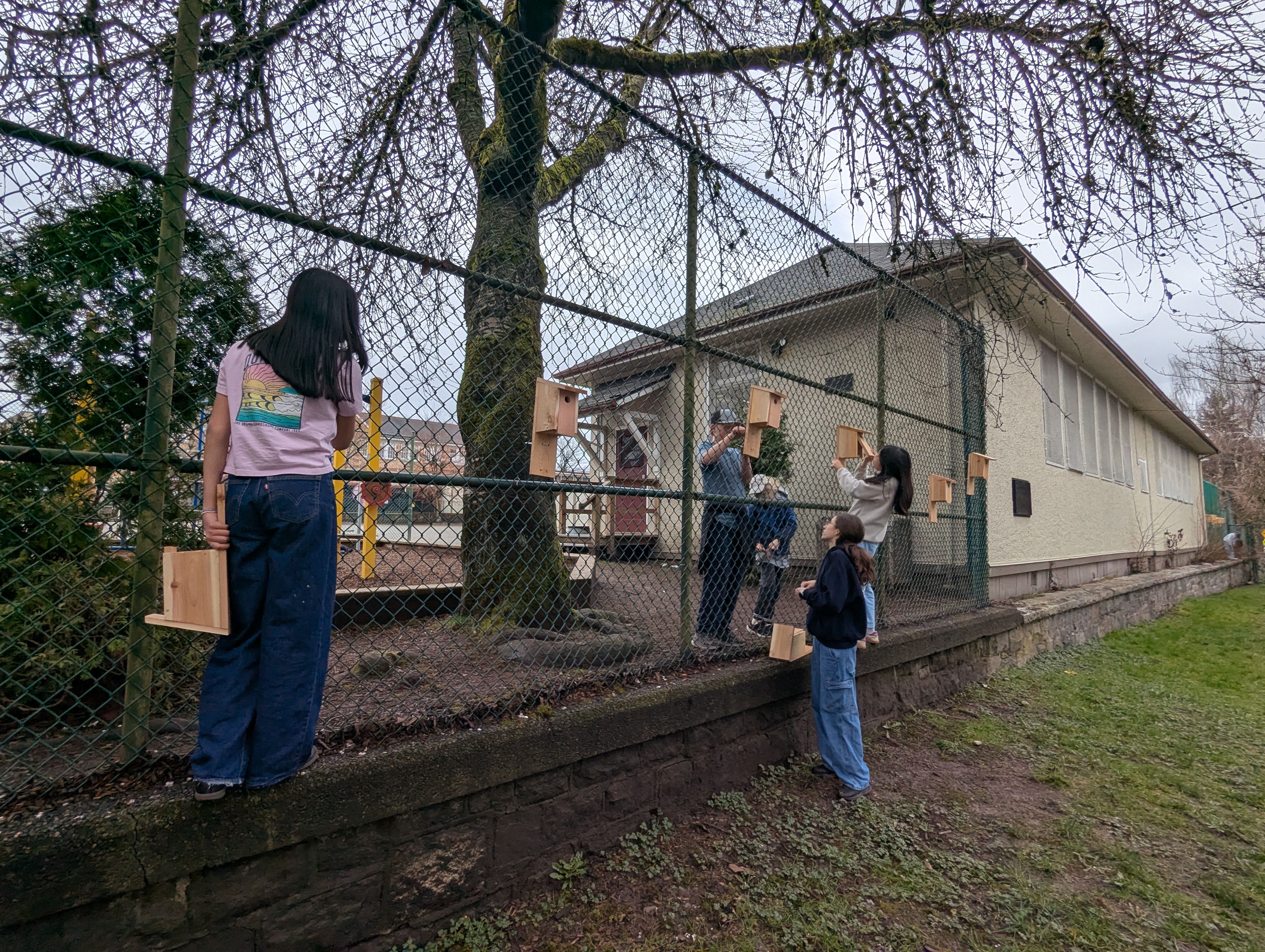
And at South Kelowna Elementary in Kelowna, students researched local birds and native plants, created a pollinator garden, and installed nesting boxes. Soon after, they watched a swallow carry grasses into one of the new boxes to build a nest.
Turning school grounds into living classrooms
Students also used their school grounds to investigate ecological questions, collect data, and apply what they were learning.
At Highland Secondary in Comox, students conducted an iNaturalist biodiversity survey to identify and document plants and animals. Their findings established a baseline and helped guide habitat improvements, including a pollinator bed and mason bee house.
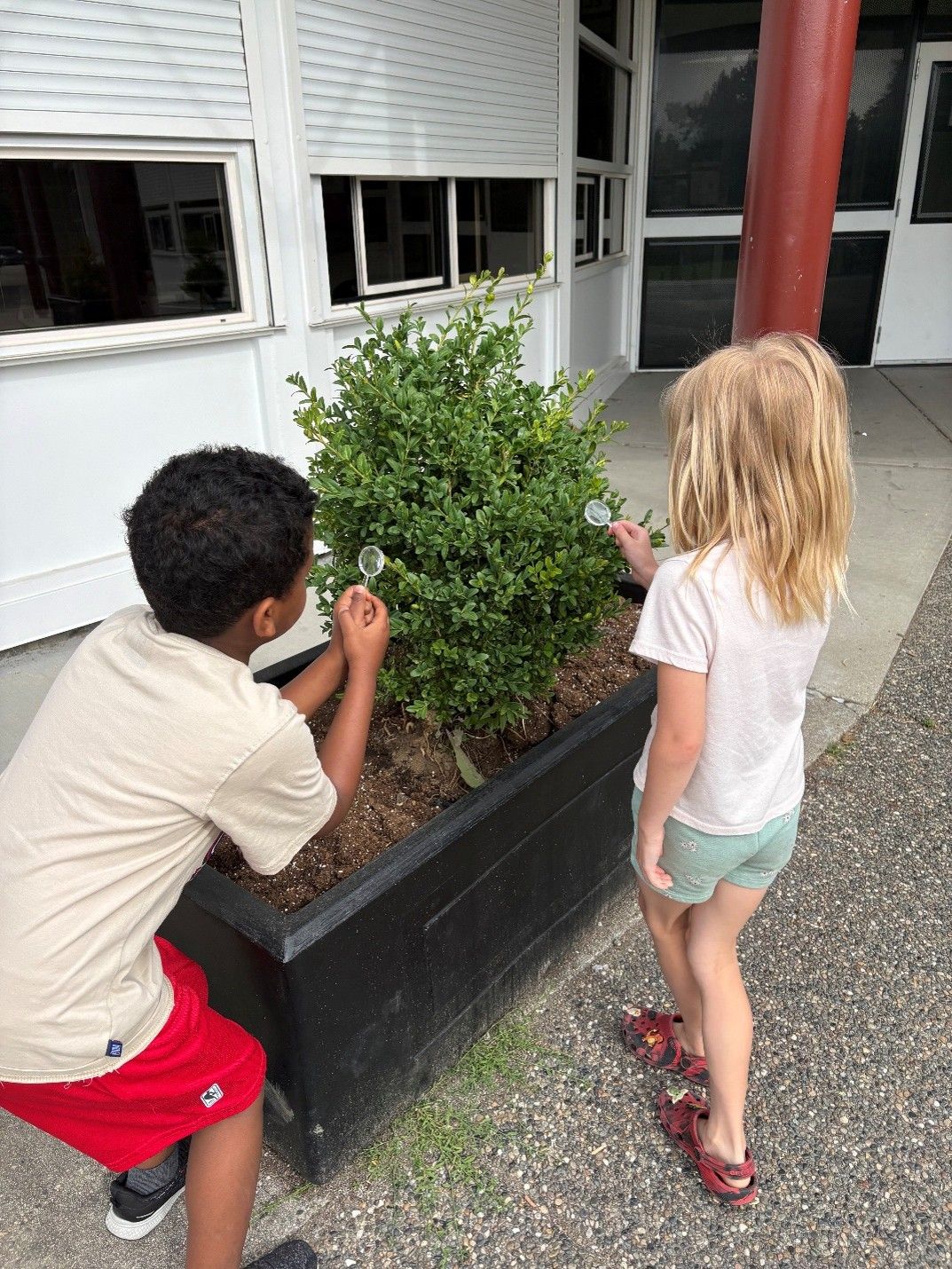
At Coyote Creek Elementary in Surrey, students used clipboards, sit spots, and insect collection kits to observe and catalogue species visiting their new garden, building observation and identification skills through fieldwork.
At Chute Lake Elementary in Kelowna, students used the Merlin app to identify birds, assessed the relative lack of pollinators and insects, and later observed more bees and butterflies around their new garden.
One Grade 5 student described a shift in their understanding of ecosystems: “No matter if it is smaller than an ant, every single living organism has an important part in this world.”
The impact extended to teachers, too. At Shannon Lake Elementary in West Kelowna, one teacher described being immersed in nature-based learning as “transformative,” saying the experience would influence their teaching practice in the future.

Supporting confidence, wellbeing, and belonging
Teachers reported students developing confidence, pride, responsibility, and ownership through their projects, alongside moments of calm and connection outdoors.
At Rutland Middle School in Kelowna, Grade 8 students formed a Biodiversity Leadership Team, growing native plants, organizing activities, and teaching their peers.
One student reflected on the personal impact of taking on that role: “Speaking up, taking initiative, and trying new things wasn’t always easy, and at times I doubted myself but those challenges helped me become stronger and more confident.”
At Pearson Road Elementary in Kelowna, students worked together to improve a struggling school garden by researching soil health, pollinators, and natural pest control.
One Grade 4 student described another benefit: “I love working out in the garden. It makes me feel calm when I get to have my hands in the dirt.”
Building knowledge and connection to place
Many projects introduced students to native and Indigenous plant species and deepened their understanding of the ecosystems around their schools.
At Prince of Wales Secondary in Vancouver, students created and cared for a Medicine Wheel Garden with native species including Nootka rose, salal, nettle, yarrow, and lupin. Students monitored biodiversity through iNaturalist and explored plant uses including teas, salves, and herbs.
At South Meridian Elementary in Surrey, students planted Indigenous species sourced from the Coast Salish Plant Nursery and cared for them throughout the year. Their teacher watched students progress from talking generally about “plants” to identifying huckleberries and salal by name and regularly asking to care for them. The teacher described the plantings as making place-based education and First Peoples Ways of Knowing more accessible.
Together, the projects show Learning by Nature in action: students learning about nature, in nature, while building the knowledge, skills, and confidence to enhance and care for the natural spaces around them.